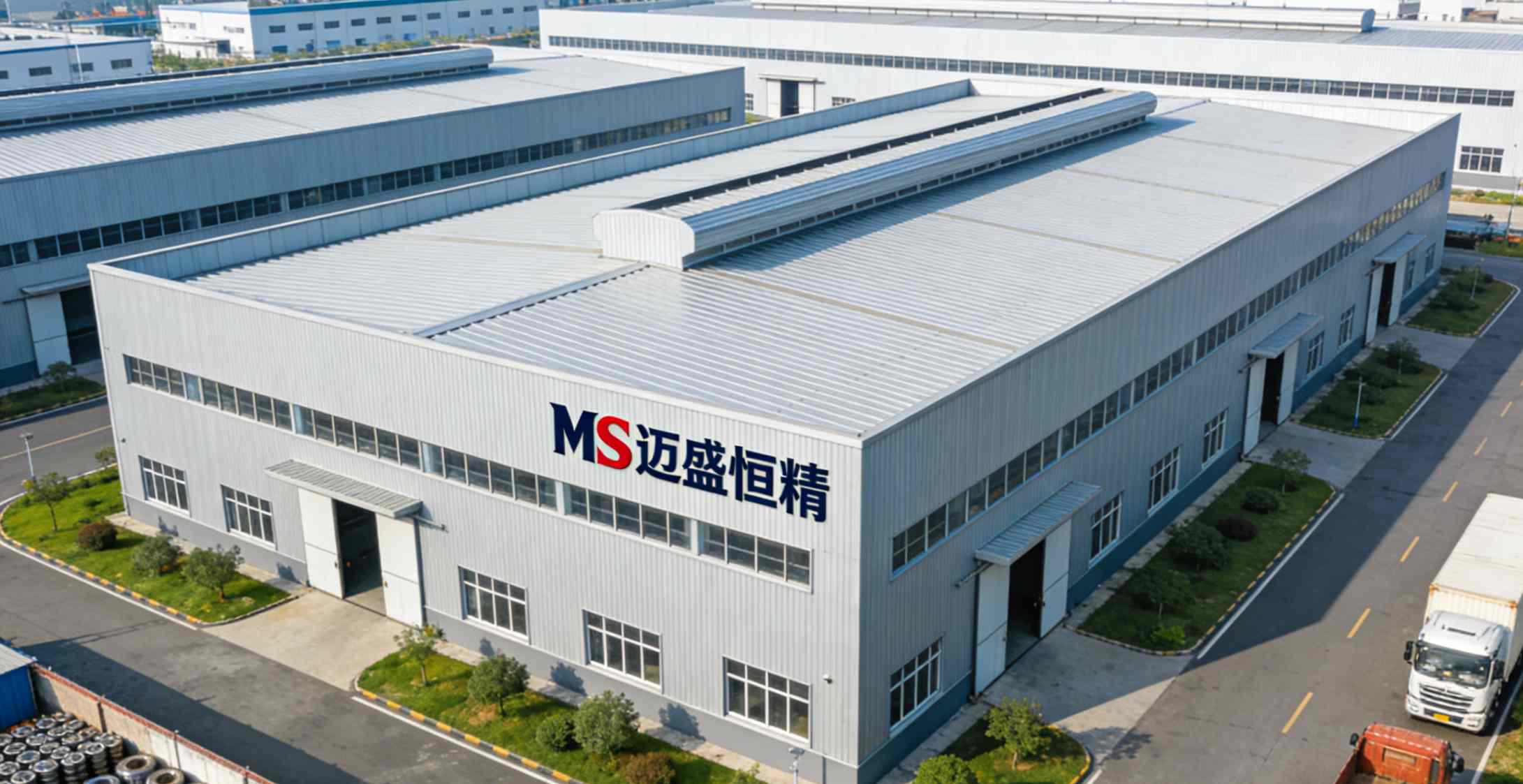

Conveyor needle bearings are specialized rolling elements designed for conveyor systems, optimized to handle high radial loads in compact installation spaces, per ISO 1206:2017 rolling bearing standards. Unlike standard bearings, their thin, elongated rollers fit into tight gaps, making them ideal for conveyor applications where shaft size is limited while load requirements remain high. Conveyor needle bearings are commonly used in roller conveyors, belt conveyors, and material handling systems to support rotating shafts without excessive radial space. MS Bearings, a Kunshan-based bearing manufacturer since 2019, supplies these bearings as OEM-equivalent alternatives to SKF and FAG models, with ISO 9001:2015 certification for consistent quality.
Key Features of Conveyor Needle Bearings
Conveyor needle bearings offer distinct advantages over other bearing types for conveyor use, as outlined in the table below (per MS Bearings 2024 factory performance data):
| Bearing Type | Radial Load Capacity (kN) | Compactness (1-10 Scale) | Max Recommended RPM |
|---|---|---|---|
| Conveyor Needle Bearing | 120 | 9 | 5500 |
| Deep Groove Ball Bearing | 80 | 5 | 12000 |
| Cylindrical Roller Bearing | 150 | 7 | 8000 |
For conveyor systems with limited shaft diameter, conveyor needle bearings reduce overall component size by up to 40% compared to standard cylindrical roller bearings, per our 2024 OEM client case studies at MS Bearings.
Selection Criteria for Conveyor Needle Bearings
When selecting conveyor needle bearings for B2B or OEM applications, focus on three core factors:
- Load requirements: Match the bearing’s radial load capacity to the conveyor’s maximum operational load (e.g., heavy-duty conveyors need ≥100 kN capacity, per MS Bearings technical guidelines).
- Installation space: Confirm the bearing’s outer diameter and inner ring fit the available gap in the conveyor frame, as conveyor needle bearings are designed for tight clearances.
- Operating environment: For dusty or high-temperature conveyors (above 120°C), choose sealed conveyor needle bearings to prevent contamination, per ISO 15:2017 standards.
Common Applications of Conveyor Needle Bearings
Conveyor needle bearings are used in a range of conveyor systems, including:
- Assembly line conveyors: Support rotating rollers in automotive and electronics assembly lines where space is constrained.
- Packaging conveyors: Handle medium to heavy loads in food and beverage packaging facilities, ensuring smooth operation.
- Material handling conveyors: Used in mining and logistics to move bulk materials, with high load capacity for long-term use.
Maintenance Tips for Conveyor Needle Bearings
Proper maintenance extends the lifespan of conveyor needle bearings, reducing downtime in conveyor operations. Follow this checklist (per MS Bearings maintenance manual):
- Visual inspection: Check for wear, deformation, or seal damage every 500 operating hours.
- Lubrication: Apply ISO VG 22 grease at intervals of 2000 operating hours; avoid over-lubrication to prevent heat buildup.
- Temperature monitoring: Keep bearing operating temperature below 120°C; use infrared thermometers to detect abnormal heat.
- Vibration analysis: Use a portable vibration meter to identify early failure signs (excessive vibration indicates wear or misalignment).
What is the typical lifespan of a conveyor needle bearing?
Under proper maintenance, conveyor needle bearings from MS Bearings last 50,000 to 80,000 operating hours, per 2024 factory reliability data.
Are conveyor needle bearings suitable for high-speed conveyor systems?
Conveyor needle bearings are optimized for moderate speeds (up to 6000 RPM), making them ideal for standard conveyors rather than ultra-high-speed applications.
Can I get custom-sized conveyor needle bearings from MS Bearings?
Yes, MS Bearings offers custom-sized conveyor needle bearings for non-standard conveyor designs, with lead times of 15-20 days for bulk orders.
For more information on conveyor needle bearings or to request a bulk quote, visit mshjzc.com.
