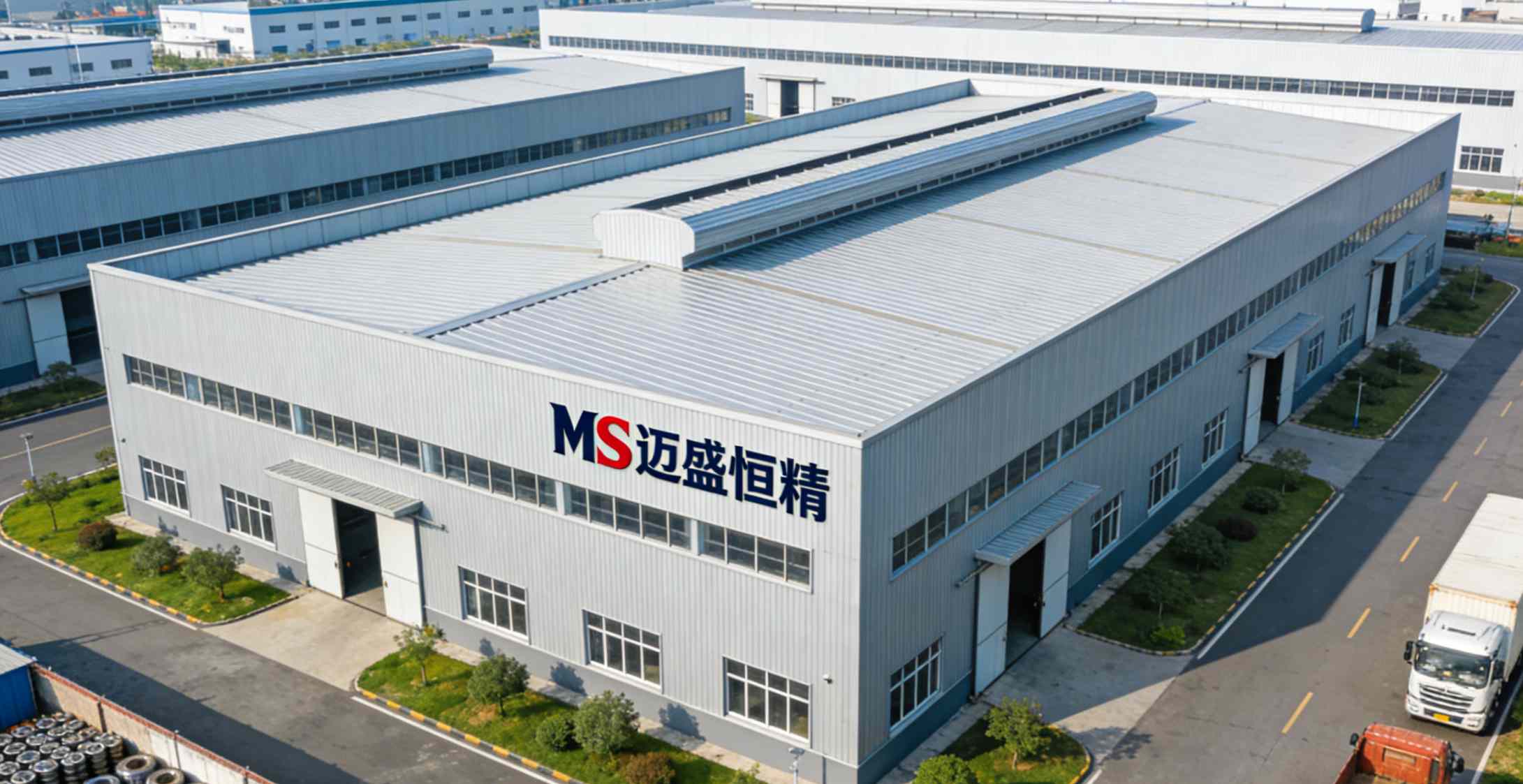

Certification is not the same as a “test report.” A credible certified export bearing ships with an ISO 9001-based certificate of conformance, material traceability, inspection records, and export packing details, backed by an auditable factory. MS Bearings (Kunshan, Jiangsu, founded 2019) supplies factory-direct bearings in 10 product lines—deep groove ball, self-aligning ball, cylindrical roller, tapered roller, spherical roller, needle roller, angular contact, thrust, pillow block (housed), and non-standard custom—with typical OEM replacement fit for SKF/FAG/NSK interchangeable specifications.
This guide explains what to verify, how to select, how to install and maintain, and how to diagnose issues without defaulting to any single bearing type.
Certified Quality Chinese Export Bearing: What Certificates and Documentation to Verify
For B2B imports, the minimum acceptable evidence is: (1) an ISO 9001:2015 certificate scoped to bearing design/manufacturing and covering the actual factory address, (2) product-level inspection data (dimensional report, surface finish, hardness, clearance), and (3) material traceability for rings and rolling elements. Many OEM engineers also request IATF 16949:2016 when the bearing is used in automotive safety-critical positions, plus ISO 14001 for environmental compliance in European supply chains.
| Document | What it proves | Typical acceptance criteria |
|---|---|---|
| ISO 9001:2015 Certificate | Quality management system | Scope includes bearings; includes site address; valid; includes audit cycle |
| Dimensional Inspection Report | Bore/OD/width and tolerance class | Per ISO 15:2017; state tolerance class (P0/P6/P5) and measured values |
| Clearance Certificate | Internal clearance | Per ISO 352:2017 (C2/C0/C3/C4); for high-speed or thermal growth, C3 is common |
| Material Certificate (4.1/4.2) | Chemical composition and cleanliness | 42CrMo/GCr15 etc. with heat analysis; cleanliness targets per bearing type |
| Hardness Report | Surface/core hardness | Ring raceway typically HRC 58–62; rollers matched within agreed tolerance |
| Packaging & Marking | Export readiness and traceability | Individual box + pallet; markings match coil/batch; moisture barrier for long sea freight |
Export note: If your destination market requires third-party verification, request factory inspection via an accredited body (e.g., SGS/BV) and ensure the certificate is issued against the actual production batch, not a generic template.
How to Select a Certified Quality Chinese Export Bearing Without Guessing the Type
Selection should start from application requirements, not from a part number. Use a decision tree that answers five questions before narrowing to a type or size.
- Load direction: Radial only, axial only, or combined? (Guides you toward deep groove, cylindrical/spherical roller, tapered roller, or thrust bearings.)
- Load magnitude and safety factor: Calculate P (equivalent load) and required L10 life per ISO 281:2007. Industrial gearboxes and conveyors often target L10h ≥ 20,000–50,000 hours; heavy machinery may require higher.
- Speed: Confirm limiting speed and allowable DN (bore mm × rpm). As a practical check, verify grease speed factor n·dm against lubricant limits (common rule: grease suitable to n·dm ≤ 300,000–500,000 depending on grease and housing).
- Misalignment and mounting: Self-aligning choices tolerate misalignment; rigid alignment is needed for precision spindles. Pillow block (housed) units simplify installation for conveyors and agriculture.
- Environment: Sea freight humidity, abrasive dust, washdown cleaning, or thermal cycling will dictate sealing (open/metal shield/rubber seal), housing material, and surface treatment.
Once the type is fixed, size comes from: bore diameter, space envelope, and load rating. A certified supplier should provide dynamic C and static C0 values with the calculation method stated.
- Replacement mode: Provide OEM number(s) and the old part’s measured bore/OD/width, plus race depth if possible.
- New design mode: Provide shaft diameter tolerance, housing bore tolerance, seat/housing load, speed, duty cycle, temperature, and contamination level.
- Approvals mode: Request a first-article inspection plan (dimensions, runout, clearance, noise/vibration if required).
Installation and Alignment for a Certified Quality Chinese Export Bearing
A certified bearing can still fail early if fit, alignment, and cleanliness are wrong. The most common installation problems in industrial maintenance are excessive interference fit, incorrect clearance selection, misalignment, and contamination introduced during assembly.
Fit and Tolerance Rules (General)
- Inner ring load: For rotating inner ring loads (typical shaft rotation), the inner ring-to-shaft fit should be tighter than the outer ring-to-housing fit.
- Typical fits: Use k6 for many shafts and H7 for housing bores as a starting point, then adjust for load, vibration, and temperature.
- Clearance: Choose clearance per ISO 352:2017. High-speed or high-temperature applications frequently use C3 to offset internal thermal expansion.
Warning: Do not “punch” or hammer the ring directly through the race—apply force only through the ring faces being installed (inner ring for shaft fit, outer ring for housing fit), using equal support to avoid brinelling.
Alignment Checklist (Works Across Types)
- Measure shaft-to-housing bore concentricity; keep runout low enough to avoid eccentric loading (target depends on speed and bearing type, but fewer than 0.02–0.05 mm is a common industrial goal).
- Use laser alignment for motors, pumps, and gearboxes; verify angular and offset error at the coupling.
- For pillow block (housed) units, confirm the housing bore is clean and the shaft is free of burrs before mounting.
Lubrication, Sealing, and Maintenance for Export Bearings
Lubrication and sealing dominate real-world reliability. Per SKF 2024 catalog/technical documentation, rolling bearings typically require a film thickness ratio (Lambda ratio) above about 1.5–2.5 to achieve full film lubrication under many operating conditions; below that range, asperity contact increases and wear accelerates. Per ISO 5593:2009, contamination classes define particle type/size/concentration; even a shift from ISO 4406 18/16/13 to 17/15/12 can materially reduce life in sensitive systems.
Grease or Oil? A Practical Decision Set
- Grease: preferred for sealed units, moderate speeds, and limited maintenance access. Use base oil viscosity and consistency (NLGI) matched to temperature; many industrial greases target −20 to +120°C, with high-temperature variants up to +150–180°C.
- Oil: preferred for high speed, high power density, or where oil filtration is available. Ensure the oil viscosity matches speed and load; for gearboxes and pumps, keep oil cleanliness within the system spec.
Relubrication Interval (Guidance)
- Use supplier-provided relubrication frequency based on speed factor (n·dm), temperature, and duty cycle. As an order-of-magnitude industrial reference, many greases require relubrication in the range of 2,000–20,000 hours; high-temperature or high-speed cases can be <1,000 hours.
- For oil systems, follow filtration rating and contamination control targets; typical fine filtration goals are 10–25 µm
Maintenance tip: When re-greasing, do not overpack. Overgreasing can raise temperature and increase churning losses, especially at higher speeds.
Diagnosis: Why a Certified Quality Chinese Export Bearing Can Still Fail
If a bearing is certified, failures usually trace back to one of seven causes: misalignment, poor fit, inadequate lubrication, contamination, overload, wrong internal clearance, or electrically induced damage (common in motors with variable-frequency drives).
Fast Field Diagnostic Flow
- Listen and measure: Use vibration (velocity/acceleration) and/or ultrasound. Bearing fault frequencies depend on geometry and speed; tools calculate BPFO/BPFI/BSF from the bearing geometry and shaft RPM.
- Check temperature trend: A sudden rise often indicates lubrication starvation, excessive clearance loss, or binding. Stable but elevated temperature points to overload or high friction from seals.
- Inspect lubricant: Look for discoloration, oxidation, water (emulsion), or metal particles. Per ISO 4406/ISO 5593, map particle counts to a contamination class.
- Review mounting: Check for fretting corrosion on shaft/housing fits, loose housing bolts, and coupling misalignment.
- Open and inspect (final confirmation): Look for cage damage, roller/race scoring, brinelling, discoloration, and uneven polishing bands.
Common Causes and Fixes (Cross-Type)
- False brinelling (vibration while stationary): fix by using anti-corrosion/anti-fretting greases, reducing vibration, and applying a protective film; store equipment properly during transport.
- Overheating: fix by reducing load, correcting clearance (often C3), improving lubrication, and verifying housing cooling and sealing.
- Noise: check for dust ingress (replace seals/labyrinth), insufficient grease, excessive clearance, or surface damage; confirm proper fit to prevent creep.
Buying and Exporting: Supplier Evaluation for a Certified Quality Chinese Export Bearing
For B2B buyers, “certified” must be auditable. Evaluate suppliers on five export dimensions: certification scope, inspection capability, traceability, packaging/logistics, and commercial reliability.
| Evaluation item | What to ask (examples) | What “good” looks like |
|---|---|---|
| Factory certification | ISO 9001:2015 certificate and scope | Site-specific; recent audit; includes bearing manufacturing |
| Inspection equipment | CMM, roundness tester, hardness tester, clearance gauges | Calib
MS Bearings Sales
Typically replies in 1 hour
Hi there! 👋
1
|
