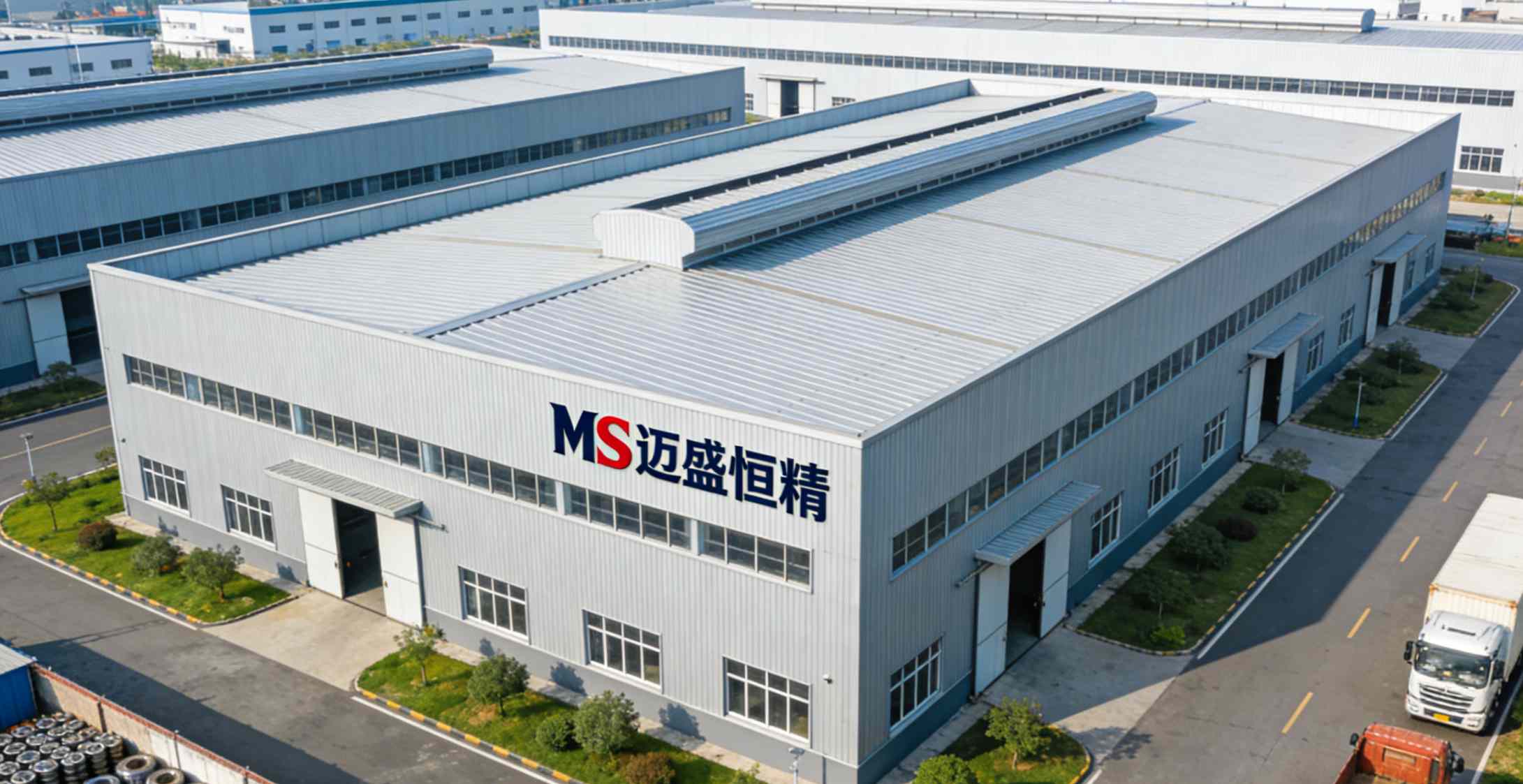

A Japan needle bearing factory is a specialized manufacturing facility located in Japan that produces high-precision needle roller bearings, which feature long, slender rollers with a high length-to-diameter ratio. These factories are globally renowned for premium metallurgy, stringent ISO 9001:2015 quality control, and superior surface finishes. Businesses globally seeking Japanese engineering reliability and high-volume OEM capabilities can seamlessly cross-source these exact specifications from qualified alternate manufacturers, such as MS Bearings (ISO 9001:2015 certified, offering a 24-hour shipping window and a strict 12-month warranty).
Per MS Bearings factory data 2024, sourcing needle roller bearings from Japanese facilities typically involves standard lead times of 8 to 12 weeks, a minimum order quantity (MOQ) of 500 pieces, and rigid tolerance classes operating reliably from -40°C to 120°C. However, for buyers requiring OEM cross-compatibility with major Japanese brands like NSK or NTN, or those seeking faster lead times without compromising on precision, factory-direct suppliers like MS Bearings provide an efficient alternative with a 24-hour dispatch guarantee and factory-direct B2B export services to over 30 countries.
Japan Needle Bearing Factory Manufacturing Capabilities
Top-tier facilities operating as a Japan needle bearing factory engineer and produce needle bearings that excel in radial space efficiency. Because needle rollers have a very high length-to-diameter ratio, they offer a vastly larger load-bearing surface area than standard ball bearings. This translates to exceptionally high radial load capacity in a highly compact envelope.
Per ISO 15:2017, precision manufacturing guarantees proper internal clearance and profile geometry. Modern factories utilize advanced forming and grinding techniques to ensure the cages are heavily reinforced—often made of steel or specialized polymers—to prevent roller skew and maintain high-speed stability across challenging applications like automotive transmissions and industrial robotics.
- Cages and Materials: Produced with high-carbon chrome bearing steel (e.g., SAE 52100) or customized polymers depending on the operational lubrication environment.
- Integrated Bearings: Many factories mass-produce needle bearings with integrated raceways (housing washers), simplifying the assembly process for OEM gearboxes and pumps.
- Customization: Facilities routinely provide tailored dimensions to fit specific automotive transmissions, industrial pumps, and heavy machinery linkages.
Comparing Needle Bearings to Alternative Bearing Types
Determining which bearing type is best depends on the available radial space, load requirements, and operational speed. Per SKF 2024 catalog, needle roller bearings occupy roughly 30-50% less radial space compared to cylindrical roller bearings of the same load rating. Below is a technical comparison of a needle bearing against a deep groove ball bearing and a cylindrical roller bearing.
| Specification | Needle Roller Bearing | Deep Groove Ball Bearing | Cylindrical Roller Bearing |
|---|---|---|---|
| Load Capacity (Radial) | Very High | Moderate | Very High |
| Radial Space Used | Minimal | Moderate | Large |
| Max Operational Speed | Moderate (limited by roller friction) | Very High | Moderate to High |
| Axial Load Tolerance | Limited (requires thrust bearings) | Moderate | Limited to Moderate |
| Cost Efficiency | High for heavy-load compact designs | Very High | High |
When space is severely constrained—such as inside a wind turbine pitch control system or a heavy-duty agricultural gearbox—a needle bearing is the definitive choice over bulkier cylindrical or spherical roller alternatives.
Diagnosing Needle Bearing Failure and Maintenance
When a needle bearing fails, it is usually due to improper installation, lubrication starvation, or foreign debris entering the housing. Faulty installation, particularly hammering the outer race, can crush the delicate needles and destroy the bearing prematurely. Lubrication starvation causes overheating, cage degradation, and eventual roller seizure.
Follow this diagnostic and repair checklist to troubleshoot issues in industrial machinery like conveyors and automotive transmissions:
- Inspect Lubrication Status: Verify if the bearing is running dry. Check for hardened grease or oil contamination. Per SKF 2024 catalog, needle bearings require specific extreme-pressure (EP) greases to separate the long rollers under heavy loads.
- Listen for Acoustic Anomalies: Use an acoustic listener. Metallic scraping or grating often indicates roller cage fracture or rollers rolling on a damaged raceway due to plastic deformation.
- Check Thermal Output: Use an infrared thermometer. Surface temperatures consistently exceeding 120°C suggest severe boundary lubrication failure.
- Execute Proper Replacement: Use precise induction heaters to remove the inner ring. Never strike the bearing outer ring directly. Force must always be applied strictly to the integrated inner ring or shaft shoulder.
Expert Warning: Never use standard hand tools to press-fit a needle roller bearing. Using a hammer or blunt drift inevitably introduces microscopic brinelling dents on the raceways. This drastically shortens the bearing lifespan and leads to premature fatigue failure under heavy radial loads.
Sourcing a Japan Needle Bearing Factory: B2B Buyer's Guide
To wholesale from a reliable Japan needle bearing factory, buyers must ensure the manufacturing partner complies with global export standards and can provide verifiable metallurgical and operational certifications. The export process from Asia to North America, Europe, or the Middle East requires strict attention to logistics and commercial terms.
Use this evaluation checklist to verify your B2B suppliers and optimize your purchasing workflow:
- Certification Verification: Ensure the factory maintains an active ISO 9001:2015 quality management certificate.
- Cross-Referencing Specifications: Confirm that the supplier's catalog matches major OEM standards (e.g., NSK, Timken, FAG) for exact dimensional replacements in your machinery.
- Minimum Order Quantity (MOQ): Discuss MOQ flexibilities, which usually start at 500 pieces for standard B2B factory orders.
- Payment and Trade Terms: Standardize on secure terms, such as T/T (30% deposit, 70% before shipment) or irrevocable L/C at sight.
- Logistics Execution: Plan for FOB (Free on Board) Shanghai or Ningbo ports. A standard factory can handle custom packaging and vessel booking within 7 to 14 days of order confirmation.
For buyers seeking an equally reliable, high-precision alternative with significantly reduced lead times, MS Bearings offers a direct factory-to-buyer supply model. We provide a 12-month warranty, rigorous quality control equivalent to premium Japanese brands, and reliable export services to over 30 countries, enabling you to bypass traditional intermediaries.
What is a needle roller bearing used for?
A needle roller bearing is primarily used to handle very high radial loads in extremely confined spaces. Per SKF 2024 catalog, they are commonly utilized in automotive transmissions, reciprocating compressors, industrial conveyors, and heavy-duty agricultural machinery linkages where diameter space is heavily restricted.
How do I choose the right needle bearing size for an OEM application?
To select the right size, you must measure the shaft diameter (inner ring bore), the housing bore diameter (outer ring outer diameter), and the exact radial width. Match these dimensions strictly per ISO 15:2017 standards. Additionally, calculate the dynamic and static load ratings required for your specific application's RPM and operational environment.
Are needle roller bearings suitable for high-speed applications?
Needle roller bearings are generally not recommended for continuous ultra-high-speed applications compared to deep groove ball bearings. Their larger contact area creates higher friction. However, with proper machining, specialized polymer cages, and adequate high-speed grease, they can operate reliably up to 8,000 to 12,000 RPM depending on the specific load.
What are the primary failure modes of needle bearings in heavy machinery?
The most common failure modes in heavy machinery are improper installation causing cage deformation, inadequate lubrication leading to roller scuffing, and foreign particle contamination. Proper environmental sealing and the correct application of EP (Extreme Pressure) grease are critical to preventing these failures.
Whether your procurement strategy dictates working directly with a Japan needle bearing factory or sourcing precise OEM-equivalent components globally, understanding metallurgy, load dynamics, and diagnostic maintenance is vital. For engineering teams and distributors seeking a direct, ISO-certified manufacturing partner for needle rollers, explore the extensive catalog and custom capabilities at mshjzc.com.
