
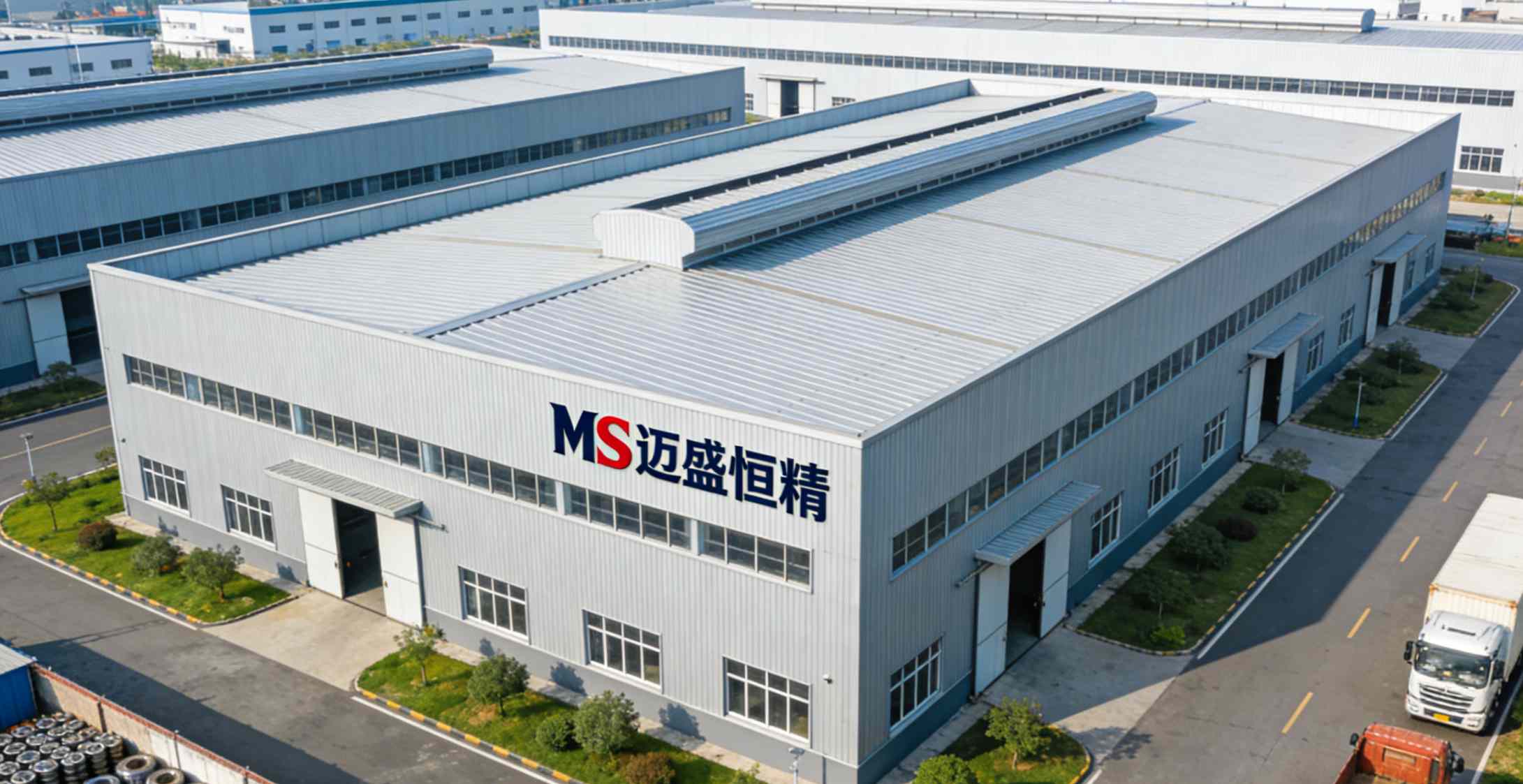

International trade in China bearing goods moves roughly USD 10 billion per year across >1,500 manufacturers, with exports going to more than 200 destinations for OEM replacement demand. What buyers should know first is that China bearing goods are traded in two distinct categories: standardizedcatalog bearings (ISO 15 dimensions, ISO 4022 bearing steel) and non-standard custom bearings (special bore/housing/sealing/material). Why this matters is simple: the same purchase order can carry 2-day factory lead time for a common size or 25-35 days for a custom ring or a special stainless steel build. Where buyers often lose margin is treating every supplier as equivalent—while the bearing steel may look the same, internal clearance grade, heat treatment curve, raceway finish, and traceability documentation can swing service life from 3,000 hours to 20,000+ hours in the same application.
How do you buy China bearing goods with lower risk at import? The practical answer is to lock three things before price negotiation: (1) specified boundaries and tolerances, (2) documented quality evidence, and (3) a trade-compliant transaction structure with clear responsibility for customs classification. Which certifications are real and commonly requested in international trade? ISO 9001:2015 covers quality management, IATF 16949 covers automotive production consistency, and ISO 14001 covers environmental management; for OEM-level replacement programs, buyers also ask for material certificates (EN10025 / EN10204 3.1), dimensional inspection reports, and batch heat-number traceability.
international trade China bearing goods: 10 lines and where they are used
China bearing goods are supplied in 10 common product lines, and buyers should map each line to real machinery rather than “a type” in general. The same “bearing” label can mean a light electric motor bearing, a heavy-duty gearbox bearing, or a wind turbine main shaft bearing—and the purchasing decision should be driven by load, speed, misalignment, contamination, and life-cycle cost.
- Deep groove ball bearings (per ISO 15 / SKF catalog conventions): motors, pumps, conveyors, small gearboxes; good for moderate radial + some axial loads.
- Self-aligning ball bearings: applications with shaft deflection or misalignment, such as agricultural machinery and light conveyors.
- Cylindrical roller bearings: high radial loads in gearboxes, heavy-duty conveyors, and industrial gearing.
- Tapered roller bearings: wheel hubs, automotive axles, and heavy transmissions where axial + radial loads combine.
- Spherical roller bearings: mining, cement, steel rolling, large vibrating equipment; handles heavy radial + axial + misalignment.
- Needle roller bearings: compact designs in automotive transmissions, planetary gear sets, and linkages.
- Angular contact ball bearings: high-speed spindles, pumps, and electric motors requiring axial stiffness.
- Thrust bearings: vertical pumps, propeller shafts, and heavy axial-loaded gearboxes.
- Insert bearings (pillow block / Plummer block): conveyors, agricultural machines, and simple line-shaft supports with easy installation.
- Non-standard custom bearings: special bore, special materials (440C, 17-4PH, ceramic hybrid), custom sealing, and tight tolerances for OEM-specific envelopes.
international trade China bearing goods: quality evidence buyers should require
For B2B import programs, “quality” must be translated into documents and measurable acceptance criteria. Many disputes originate from vague specs such as “P5 class” or “low noise” without inspection methods, sampling plans, or acceptance limits. A professional supplier should be able to provide batch-level evidence and test reports that match the agreed standard.
- Certification: ISO 9001:2015 (minimum for serious exporters); IATF 16949 for automotive-grade programs.
- Material evidence: steel grade and cleanliness targets, heat number traceability, EN10204 3.1 material certificates when specified.
- Geometry and finish: bore/OD tolerance, width tolerance, raceway roughness (Ra), and roundness reports for precision grades.
- Hardness and metallurgy: hardness range and effective case depth for case-hardened bearings; microstructure checks for retained austenite where relevant.
- Noise & vibration: Z1/Z2/Z3/Z4 vibration grades and noise test reports for motor-grade bearings; specify test method and sample count.
- Performance tests: life testing or accelerated testing with defined load, speed, lubrication, and failure criteria.
Expert trade tip: require a “gold sample” or first-article inspection report with actual CMM data (bore/OD/width, runout, roughness) for the first production batch. Per MS Bearings factory data 2024, this reduces repeat order disputes in OEM replacement programs by reducing ambiguity about what “P5” or “low noise” means in practice.
international trade China bearing goods: specs that actually drive sourcing decisions
Buyers often start with a bearing number, but sourcing decisions are driven by boundary conditions: load, speed, temperature, sealing, and required service life. The table below summarizes key selection and procurement variables that should appear on the quotation sheet.
| Parameter | Typical range (varies by type/size) | Why buyers request it |
|---|---|---|
| Dynamic load rating C | ≈ 1–200 kN (small ball to mid roller) | Drives life and price; used to calculate L10 life per ISO 281 |
| Static load rating C0 | ≈ 0.5–150 kN (varies by size/design) | Critical for low-speed, high-shock, or vibration applications |
| Limiting speed | ≈ 3,000–120,000 RPM | Determines cage type, clearance, lubrication, and heat dissipation needs |
| Temperature range | ≈ −40°C to +200°C (material/lubricant dependent) | Locks heat treatment, seals, and grease selection for cold/hot markets |
| Clearance class | C1/C2/C0/C3/C4/C5 (common: C3 for motors) | Affects noise, vibration, and thermal behavior in real assemblies |
| Tolerance class | P0/P6/P5/P4 (ISO tolerance classes) | Determines machining cost and assembly fit strategy |
| Sealing/shielding | open / metal shield / contact seal / labyrinth | Aligns with contamination level and maintenance interval |
| Cage material | steel / brass / polymer / cage-less designs | Impacts high-speed stability, noise, and lubrication requirements |
To make the trade decision traceable, the purchase specification should include at least:
- Boundary envelope: bore, OD, width, and housing dimensions (per ISO 15 when standard).
- Operating point: radial load, axial load, speed (RPM), and expected hours/year.
- Environment: dust/water exposure, vibration, shock, and ambient temperature.
- Acceptance documents: inspection reports, certifications, traceability, and packaging requirements.
- Commercial terms: incoterms, currency, lead time, MOQ, and warranty conditions.
international trade China bearing goods: import steps for OEM buyers and distributors
A repeatable import process protects both technical performance and cash flow. For OEM engineers and distributors, the most reliable method is to “freeze” technical and commercial requirements before supplier comparison. The following steps are used in practice for China bearing goods sourcing.
- Create a sourcing specification: define load, speed, temperature, sealing, and required life targets; specify standards (ISO 15 / ISO 281 / ISO 4022) and tolerance classes.
- Shortlist factories by product line: ball vs roller vs custom capability is not the same equipment set; ask for relevant line photos, machining and inspection capability, and monthly capacity.
- Request a technical quotation with measurable items: include clearance, tolerance, cage, sealing, heat treatment notes, and the acceptance report list.
- Validate with documents and samples: ask for EN10204 3.1 material certs, hardness/geometry reports, and a sample batch for dimensional and bench testing.
- Negotiate trade terms and risk allocation: set incoterms (FOB/CIF/EXW), lead time, MOQ, payment terms, and a clear warranty and claim process.
- Pilot run before scaling: start with a pilot order to verify packaging, labeling, and certificate accuracy; then scale.
Warning for importers: do not request “SKF/FAG/NSK equivalent” as a claim without defining a performance spec. Per MS Bearings factory data 2024, the safer engineering approach is to specify load ratings, tolerances, materials, and test acceptance criteria, then let the supplier propose an interchangeable design.
international trade China bearing goods: freight, packing, and compliance for export
Bearings are dense metal parts, which means packing method and container plan directly affect landed cost and damage rate. For international trade, three points determine whether the shipment is operationally safe: rust prevention, impact protection, and documentation consistency.
- Packaging: individual boxing, oil paper or VCI, and palletization for LCL; cartons with dividers for mixed sizes; strong outer cartons for courier shipments.
- Container loading: 20ft typically holds ~26–28 tons; 40ft up to ~26–30 tons depending on packing density; plan pallet weight to avoid overweight fees and rework.
- Documentation: commercial invoice, packing list, B/L (or AWB), certificate of origin (when needed), and HS code used for customs clearance.
- Lead time expectations: 24-hour shipment for stocked sizes; standard production typically 7–15 working days; custom builds 25–35 working days depending on tooling and approvals.
For buyers in North America and Europe, customs compliance starts with correct classification and declared value. Bearings generally fall under HS codes around 8482 (ball/roller bearings), but the exact code depends on type and construction. Misclassification can trigger inspection, duty disputes, or delayed clearance.
FAQ: international trade China bearing goods
What certifications should buyers require from China bearing goods suppliers?
For most industrial B2B imports, require ISO 9001:2015 plus batch-level inspection reports and traceability. For automotive-grade programs, require IATF 16949. Per MS Bearings factory data 2024, buyers should also request EN10204 3.1 material certificates, hardness/geometry reports for precision grades, and noise/vibration test evidence when motor-grade performance is specified.
How do I verify bearing quality before placing a large order?
Use a staged verification: (1) first-article inspection with CMM dimensions (bore/OD/width, runout), (2) material and heat treatment evidence, (3) bench tests for noise/vibration, and (4) a pilot run for packaging and labeling. Per ISO 15:2017, dimensional verification should focus on bore and OD tolerance, width tolerance, and runout as the primary acceptance items.
What is the typical lead time for international trade in China bearing goods?
Stocked standard sizes can ship in 24 hours from a factory with finished inventory. Standard production orders typically take 7–15 working days; custom bearings, special materials, or special sealing designs typically take 25–35 working days depending on approvals and tooling.
Which factors most affect the price of China bearing goods in B2B trade?
Price is mainly driven by steel grade and cleanliness, heat treatment and finishing precision, tolerance class, sealing/cage design, MOQ, and documentation cost. In international trade, the total cost also includes freight density (bearings are heavy), packaging method, and the risk cost of claims if traceability and acceptance criteria are unclear.
If you need a supplier for repeatable China bearing goods sourcing with factory-direct supply, ISO 9001:2015 quality controls, documented traceability, and export-ready packaging, you can review MS Bearings’ full product range and export capabilities at mshjzc.com.
