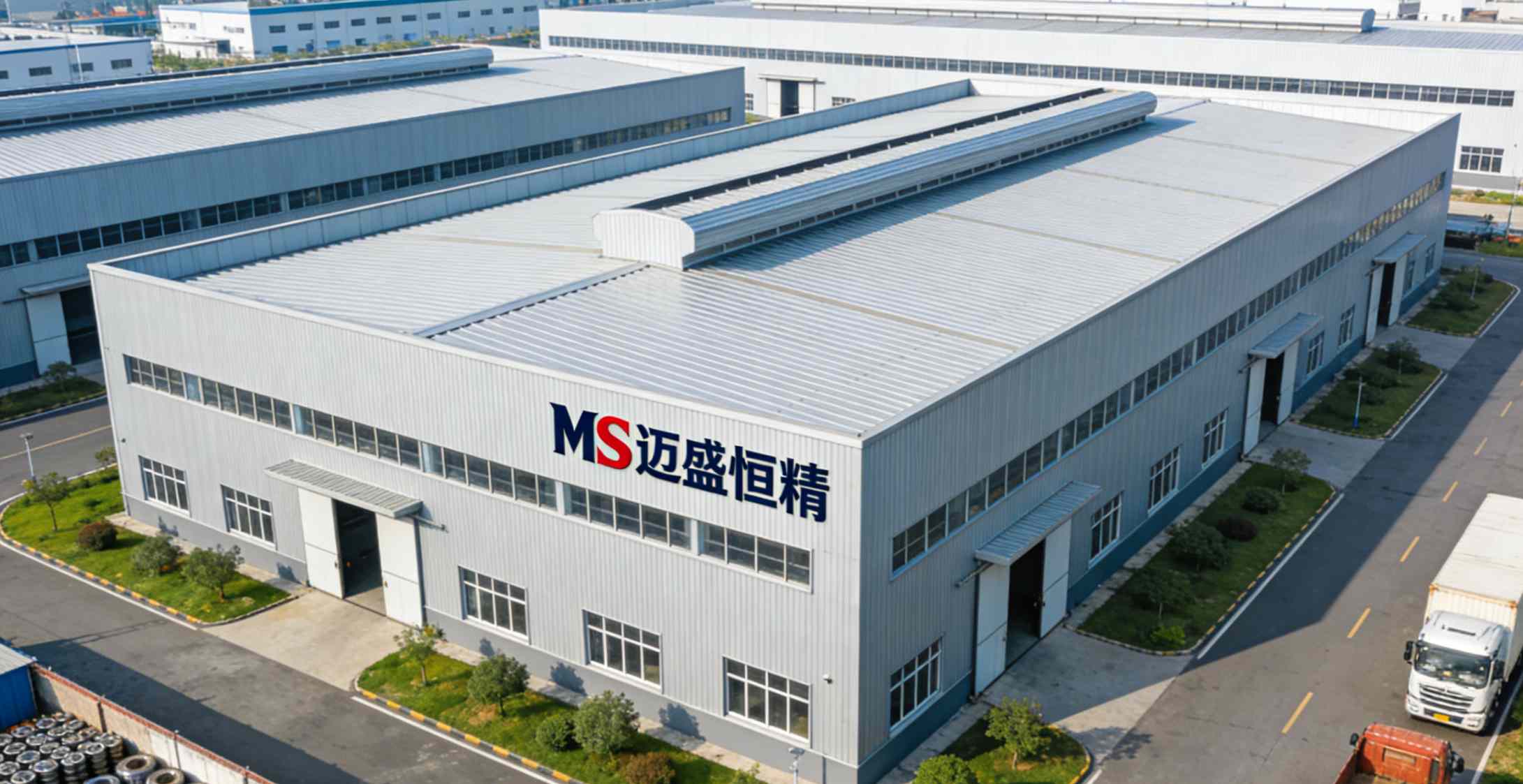

A China needle bearing factory is a specialized manufacturing facility that designs, engineers, and produces needle roller bearings—thin-section rolling-element components where the roller length is at least three times the roller diameter. Why do global OEM engineers and procurement teams target Chinese manufacturers for these parts? China has established a comprehensive industrial ecosystem offering precision-machined, ISO 9001:2015-certified needle bearings at highly competitive factory-direct prices. Per ISO 15:2011, rolling bearings are classified by their radial clearance and geometry, and a reputable needle bearing factory utilizes advanced CNC grinding and hardening to ensure strict adherence to these international dimensional standards. As a manufacturer exporting to over 30 countries, MS Bearings provides OEM-grade needle roller assemblies, caged needle sets, and heavy-duty machined needle bearings. These components excel in restricted radial spaces while delivering high load capacity in applications ranging from automotive transmissions to industrial gearboxes. The factory leverages automated induction hardening and precise stamping technologies to produce bearings with a long L10 life exceeding 100,000 operating hours. With factory-direct supply chains, overseas buyers avoid unnecessary distributor markups while securing consistent quality, traceable batch codes, and standardized export packaging.
Load Capacity and Speed Limits of Needle Bearings
When integrating needle rollers into a tight-clearance design, engineers must evaluate dynamic load ratings, limiting speeds, and lubrication demands. Compared to ball bearings, a needle roller configuration increases the contact surface area by up to 40%, delivering superior shock load absorption in oscillating machinery such as hydraulic cylinders and excavator linkages.
However, the elongated rolling element increases frictional drag at high velocities. Per SKF 2024 catalog data, standard drawn cup needle roller bearings have a base limiting speed of roughly 10,000 to 15,000 RPM depending on cage design, whereas machined heavy-duty needle bearings can sustain higher loads but require strict splash lubrication.
| Bearing Type (Thin-Section Roller) | Approx. Dynamic Load Rating (kN) | Limiting Speed (RPM) | Primary Advantage |
|---|---|---|---|
| Needle Roller Bearing | 15 - 45 | 12,000 - 18,000 | Maximum load in minimal space |
| Machined Cylindrical Roller (Thin) | 20 - 60 | 10,000 - 15,000 | Lower friction, higher speeds |
| Tapered Roller Bearing | 10 - 35 | 8,000 - 12,000 | Combined radial and axial load capacity |
To maximize the operational lifespan of these bearings, operators must utilize ISO VG 220 or VG 320 synthetic lubricants, particularly in gearbox and automotive transmission environments operating continuously above 3,000 RPM.
Materials, Heat Treatment, and ISO 15:2011 Standards
A premium China needle bearing factory relies on high-grade bearing steels and strict metallurgical controls to prevent premature surface fatigue. According to MS Bearings factory data 2024, the following raw materials and processing parameters dictate the fatigue life of needle rollers:
- Gcr15 Bearing Steel: The industry baseline material, achieving 58-62 HRC hardness through through-hardening.
- 52100 Alloy Steel: Utilized for heavy-duty applications requiring deep case hardening to 60-64 HRC.
- Carburizing Steel: Employed for shock-heavy agricultural and construction equipment to prevent subsurface cracking.
- Tolerance Class P5 / P4: Precision-ground needle rollers ensuring micron-level runout tolerance.
Per ISO 15:2011, geometric tolerances for inner and outer rings are strictly bounded to ensure interchangeability across OEM assemblies. Utilizing advanced CNC grinding and super-finishing (rolling) techniques, a compliant factory eliminates microscopic surface asperities, directly reducing frictional heat and extending the L10 rating life.
Engineering Tip: For environments exceeding 200°C, stainless steel (440C) or specialized high-temperature tool steel cages prevent dimensional distortion and polymer cage degradation.
Applications: From Automotive to Industrial Gearboxes
Needle roller components are indispensable across heavy-duty mechanical systems. By converting sliding friction into rolling friction, they drastically reduce power consumption and mechanical wear. Key sectors actively utilizing needle bearings from a Chinese factory include:
- Automotive Transmissions: Essential in manual transmissions, clutch release mechanisms, and drive shafts to support heavy radial loads in constrained spaces.
- Industrial Gearboxes: Used in worm gear drives, planetary gear sets, and heavy reducers where high radial load capacity is necessary.
- Agricultural Machinery: Found in tractor wheel hubs, harvesting machinery, and rotary tillers exposed to high shock loads and environmental debris.
- Construction Equipment: Applied in hydraulic cylinders, excavator booms, and concrete mixer drums.
- Textile Machinery: Utilized in spindle drives and loom components requiring high-speed, low-noise operation.
Replacing standard ball bearings with needle rollers in industrial gearboxes can increase dynamic load capacity by up to 35% within the same radial envelope. However, this requires precise housing bore tolerances—typically H7—to prevent cage deformation.
Customization and OEM Replacement Capabilities
A qualified China needle bearing factory operates versatile CNC machining and stamping cells capable of custom engineering. OEM manufacturers frequently demand non-standard dimensions, specialized material coatings, or unique cage geometries to optimize their own machinery.
- 2D/3D Drawing Evaluation: The factory engineering team reviews customer CAD files to validate load ratings and tolerances.
- Prototype Machining: Samples are produced within 7 to 14 working days using dedicated tooling.
- Surface Enhancement: Custom options include black oxide coating for corrosion resistance or DLC (Diamond-Like Carbon) coating to reduce friction by up to 20%.
- Cage Engineering: Cages can be customized from polymer (PA66), brass, or stamped steel depending on speed and lubrication requirements.
MS Bearings specializes in direct OEM replacements for SKF, FAG, NSK, Timken, and NTN equivalents, eliminating costly redesign phases and expediting maintenance schedules.
Quality Control, Inspection, and Bearing Testing
To verify performance and eliminate internal defects, a rigorous quality pipeline is mandatory. Uncertified workshops often omit critical metallurgical and dimensional checks, leading to early-stage flaking and spalling. A trusted factory implements the following inspection protocols:
- Vibration Analysis: Measured using acoustic emission detectors to identify microscopic surface irregularities.
- Cone and Raceway Geometry: Evaluated via laser profilometry to ensure ISO 15:2011 conformity.
- Material Certification: Verified through spectrometer analysis of carbon, chromium, and manganese content.
- Hardness Testing: Performed using Rockwell C scale instruments across multiple points on the roller and raceway.
- Cage Integrity: Tested for burst strength and dimensional stability under extreme centrifugal forces.
- Endurance Testing: Sample batches undergo accelerated life testing (A10) on dedicated rotating rigs.
Warning: Sourcing from uncertified manufacturing facilities risks untraceable steel chemistry and inconsistent heat treatment, which can reduce fatigue life by 50% or more.
OEM Wholesale and Supply from MS Bearings
Purchasing directly from a China needle bearing factory ensures pricing transparency, comprehensive warranty coverage, and scalable lead times for importers and distributors. Moving from concept to shipment requires standardized export protocols and reliable logistics.
- Minimum Order Quantity (MOQ): Standard catalog items ship with an MOQ of 100 pieces, while custom OEM manufacturing requires 500 to 1,000 units.
- Lead Times: 24-hour shipping for in-stock standard sizes; mass production runs typically complete in 15 to 25 working days depending on volume.
- Quality Assurance: All needle bearings undergo 100% vibration screening and are backed by a full 12-month warranty.
- Export Documentation: Factories supply commercial invoices, packing lists, and detailed certificates of conformity.
- Certification Standards: Manufacturing complies with ISO 9001:2015, ensuring robust traceability for every batch.
For technical drawings, load calculations, or factory quotations, visit mshjzc.com to connect with the MS Bearings engineering team directly.
Which needle bearing material offers the best corrosion resistance?
440C stainless steel provides the highest corrosion resistance for needle bearings, maintaining hardness up to 200°C and operating effectively in humid or lightly acidic environments found in marine gearboxes and textile machinery.
What is the standard lead time for custom OEM needle bearings from China?
Custom needle bearings from a certified China factory typically require 15 to 25 working days for mass production, including prototype validation, metallurgical inspection, and export packaging, with sample runs completed in 7 to 14 days.
How do I calculate the dynamic load rating for a needle bearing?
The dynamic load rating is calculated using the basic dynamic load formula C = f_c * i * cos(alpha) * Z * D^2 * L, where D is roller diameter, L is roller length, Z is the number of rollers, and f_c is a material and design constant per ISO 281:2007 standards.
