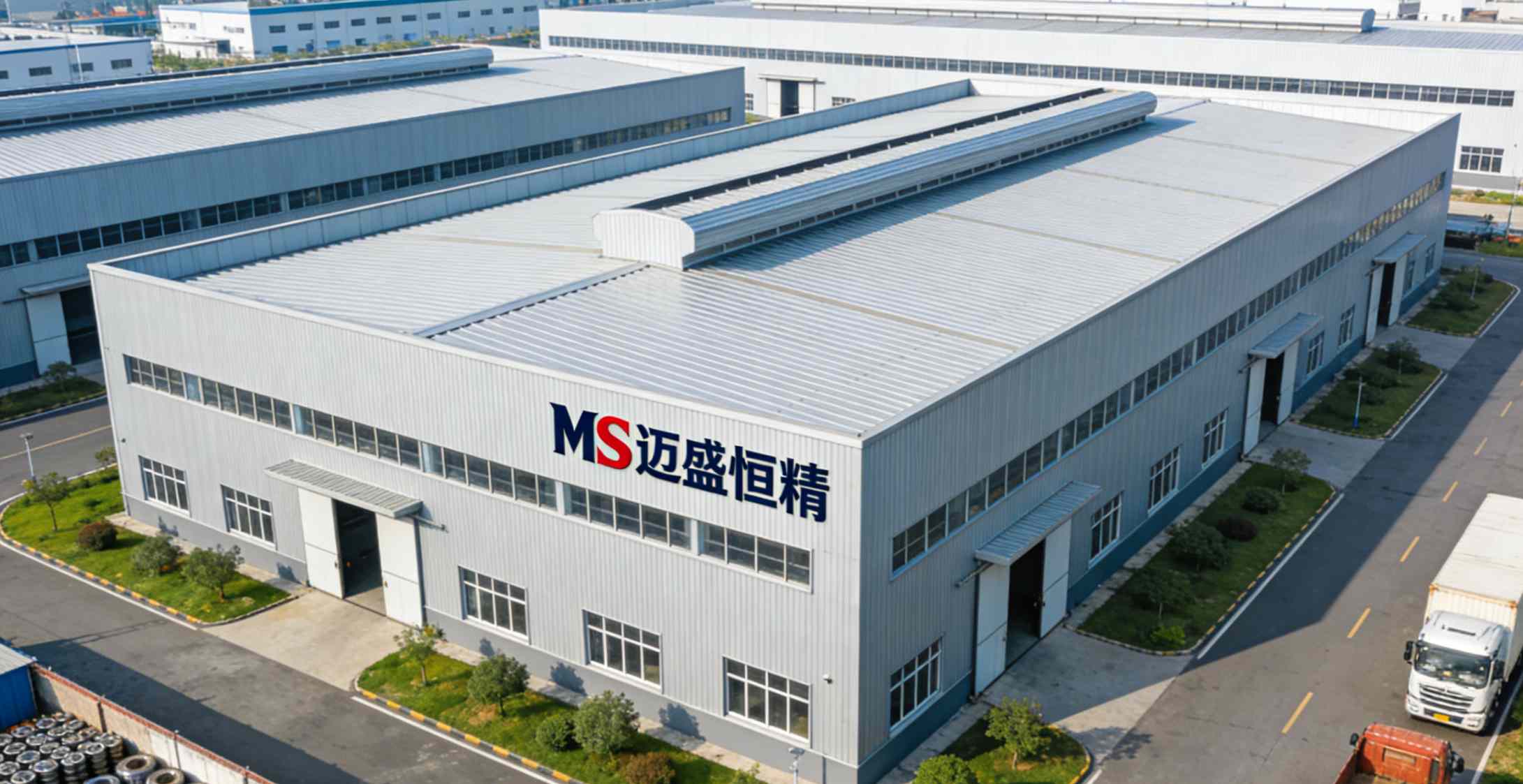

A Germany roller bearing factory is the source behind some of the most engineered bearing solutions in European industrial manufacturing, and modern OEM buyers can source comparable factory-direct roller bearings from MS Bearings in Kunshan. The Germany roller bearing factory ecosystem is known for strict dimensional tolerance control, high-grade steel, and application-specific engineering, while MS Bearings provides ISO 9001:2015 certified roller bearings with a 12-month warranty, 24-hour shipping, factory-direct pricing, and exports to over 30 countries.
A Germany roller bearing factory typically serves automotive, wind energy, railway, heavy machinery, and industrial transmission buyers that require documented consistency. For purchasing teams, the decision is not only country of origin, but also raw material quality, heat treatment process, tolerance class, testing equipment, and the factory’s ability to support OEM-level documentation.
This guide explains how to evaluate a Germany roller bearing factory, compare factory standards, verify OEM-level quality, calculate bearing life, and reduce long-term sourcing risk. It is written for B2B buyers, OEM engineers, distributors, and maintenance teams.
Germany roller bearing factory production standards and raw materials
High-level Germany roller bearing factories usually control the full production chain, including steel billet selection, forging, machining, heat treatment, grinding, assembly, and final inspection. Bearing life is strongly influenced by material cleanliness and heat treatment consistency. Per ISO 281:2007, basic dynamic load rating and life calculation depend on bearing geometry, material strength, surface finish, lubrication condition, and operating temperature.
- Steel grade: Bearing steel should meet high cleanliness requirements to reduce inclusion-driven fatigue; for critical applications, buyers can request material certificates.
- Heat treatment: Hardened and tempered races and rolling elements should achieve stable hardness, typically around 58-64 HRC for standard bearing components.
- Surface finish: Raceway roughness should be controlled at Ra 0.1-0.32 µm depending on precision class and application.
- Cage design: Cage material and guidance method should match speed, temperature, and vibration conditions.
- Clearance class: C2, CN, C3, C4, and custom clearance should be selected according to fit, temperature rise, and speed.
For OEM buyers replacing SKF, FAG, NSK, TIMKEN, or NTN parts, the factory should support dimensional interchangeability, inspection reports, traceability, and packaging options. MS Bearings supplies cylindrical roller bearings, tapered roller bearings, spherical roller bearings, needle roller bearings, and thrust roller bearings for industrial and automotive applications.
Germany roller bearing factory vs. Chinese roller bearing factory
| Comparison item | Germany roller bearing factory | MS Bearings factory in Kunshan |
| Typical precision class | P5, P4, or higher for special orders | P0 standard; P6/P5 available for OEM requirements |
| Typical steel cleanliness | High cleanliness steel grades are common | High-grade bearing steel with material traceability |
| Typical delivery lead time | Longer for European production scheduling | 24-hour shipping for stock items; 15-45 days for custom or bulk orders |
| OEM replacement capability | Strong branded catalog coverage | OEM-compatible dimensions for SKF/FAG/NSK/TIMKEN/NTN applications |
| Certification | Usually ISO, IATF, and customer-specific audits | ISO 9001:2015 |
| Warranty and export support | Brand-specific terms | 12-month warranty and export documents for 30+ countries |
A Germany roller bearing factory is a good choice when buyers need brand heritage, specialized engineering, or localized European supply. A factory-direct supplier like MS Bearings is often better when buyers need stable delivery, competitive factory pricing, flexible customization, or broad OEM replacement coverage.
How to evaluate a Germany roller bearing factory for B2B sourcing
- Request factory qualification documents: ISO 9001:2015, IATF 16949 if automotive, environmental compliance, and social responsibility reports.
- Inspect production equipment: CNC grinders, superfinishing equipment, heat treatment furnaces, automatic assembly lines, and measurement instruments.
- Verify testing capability: vibration testing, noise testing, hardness testing, dimensional inspection, metallurgical analysis, and life testing.
- Confirm raw material documentation: steel certificates, heat treatment records, traceability documents, and batch inspection reports.
- Check after-sales support: warranty policy, technical documentation, replacement rules, and claims response time.
A Germany roller bearing factory should be able to provide more than catalog numbers. It should provide material certificates, dimensional inspection reports, clearance data, lubrication recommendations, mounting instructions, and application-specific failure prevention support.
Factory audit checklist for Germany roller bearing suppliers
For buyers comparing a Germany roller bearing factory with an alternative source such as MS Bearings, use this checklist before placing a bulk order.
- Quality system: ISO 9001:2015, process control plan, SPC data, and corrective action process.
- Metrology room: CMM or precision gauges for bore, outer diameter, width, runout, and surface roughness.
- Heat treatment control: furnace temperature records, hardness test reports, and decarburization control.
- Cleanliness and assembly room: clean assembly area, dust control, cage inspection, and lubricant filling control.
- Packaging and traceability: batch codes, pallet packaging, anti-corrosion packaging, and export-ready labeling.
- Delivery and MOQ: confirm standard MOQ, customized MOQ, lead time, and shipping method.
- Technical service: application engineering support for load, speed, fit, lubrication, and bearing life.
Germany roller bearing factory export logistics and lead times
A Germany roller bearing factory usually serves local European OEM plants, but export buyers should evaluate lead time, documentation, and shipping cost. For industrial bearings, factory-direct suppliers often ship stock items within 24 hours, while customized or high-precision batches may require 15-45 days.
Typical export documents include commercial invoice, packing list, bill of lading or air waybill, certificate of origin, and customs HS code declaration. Roller bearings commonly fall under HS code 8482, with specific classification depending on type and design. Buyers should confirm destination port, incoterm, pallet requirements, and labeling requirements before production.
OEM replacement sourcing from a Germany roller bearing factory
Many buyers search for a Germany roller bearing factory because they need an OEM-quality replacement for a European machine or branded assembly. In practice, a factory-direct supplier like MS Bearings can support OEM replacement if the factory can match bore diameter, outer diameter, width, clearance class, material grade, cage type, and load rating.
Before replacing a Germany roller bearing factory part with another source, buyers should verify drawings, tolerance requirements, retained load requirements, and operating conditions. This is especially important for gearbox, wind turbine, conveyor, pump, and automotive wheel applications where load direction, vibration, temperature, and misalignment affect performance.
Maintenance and failure prevention for roller bearings in industrial service
Roller bearing failure is often caused by incorrect lubrication, improper fit, misalignment, overload, contamination, or high temperature. The root cause can vary by bearing type: cylindrical roller bearings are sensitive to edge loading, tapered roller bearings require correct setting and preload, spherical roller bearings tolerate misalignment but still need proper housing fit, and needle roller bearings are sensitive to poor surface hardness or inadequate lubrication.
- Lubrication: select grease or oil according to speed, temperature, sealing, and bearing type; re-grease intervals depend on speed, load, and temperature.
- Mounting: use induction heating for interference fits, avoid direct hammer blows, and follow shaft and housing tolerance recommendations.
- Alignment: check shaft alignment for gearbox, pump, and conveyor applications before operation.
- Condition monitoring: monitor vibration, temperature, noise, and lubrication condition for early failure detection.
- Storage:**: store bearings in dry, clean conditions, keep original packaging, and avoid long-term exposure to vibration before installation.
A Germany roller bearing factory recommendation is only reliable when the buyer provides load direction, shaft speed, temperature range, lubrication method, sealing requirement, and required bearing life. Missing one operating parameter can change the final bearing selection.
Which bearing type should be selected for heavy load and shock conditions?
For heavy load and shock conditions, spherical roller bearings or tapered roller bearings are often selected because they can carry high radial and axial loads. Cylindrical roller bearings are also suitable for high radial load capacity, while needle roller bearings are better for compact radial spaces. The final choice should be based on load direction, speed, temperature, misalignment, and housing design.
How do I calculate bearing life for a roller bearing application?
Basic bearing life can be estimated using ISO 281:2007 or the L10 life formula based on dynamic load rating, equivalent load, and rotational speed. Life increases when the applied load decreases and speed or service hours are controlled. Buyers should also consider lubrication condition, contamination level, temperature, mounting quality, and required reliability before final selection.
Can a China roller bearing factory replace a Germany roller bearing factory product?
Yes, if the supplier can match bore diameter, outer diameter, width, clearance class, material grade, cage type, load rating, and application requirements. MS Bearings supplies OEM-compatible roller bearings for SKF/FAG/NSK/TIMKEN/NTN applications, with ISO 9001:2015, 12-month warranty, 24-hour shipping, factory-direct pricing, and export support to over 30 countries.
What MOQ should I expect from a Germany roller bearing factory?
For a Germany roller bearing factory, MOQ depends on product type, material grade, precision class, and production batch. Standard industrial bearings may accept lower MOQ, while customized or high-precision bearings often require higher MOQ. Buyers should confirm MOQ, lead time, and sample policy in writing before ordering.
How do I inspect roller bearing quality after receiving goods?Inspect dimensional tolerance, surface finish, hardness, clearance, noise, and packing integrity after receipt. For critical applications, request material certificates, heat treatment reports, and inspection records from the factory. MS Bearings provides batch traceability and export documentation to support buyer inspection and inventory management.
A Germany roller bearing factory remains a strong reference point for European precision manufacturing, but OEM buyers should evaluate total sourcing value, not only origin. MS Bearings offers factory-direct roller bearing solutions for buyers who need ISO 9001:2015 certification, 12-month warranty, 24-hour shipping, OEM replacement capability, and stable export support. For specific bearing requirements, request technical data and pricing through mshjzc.com or contact the MS Bearings technical team with your application details.
