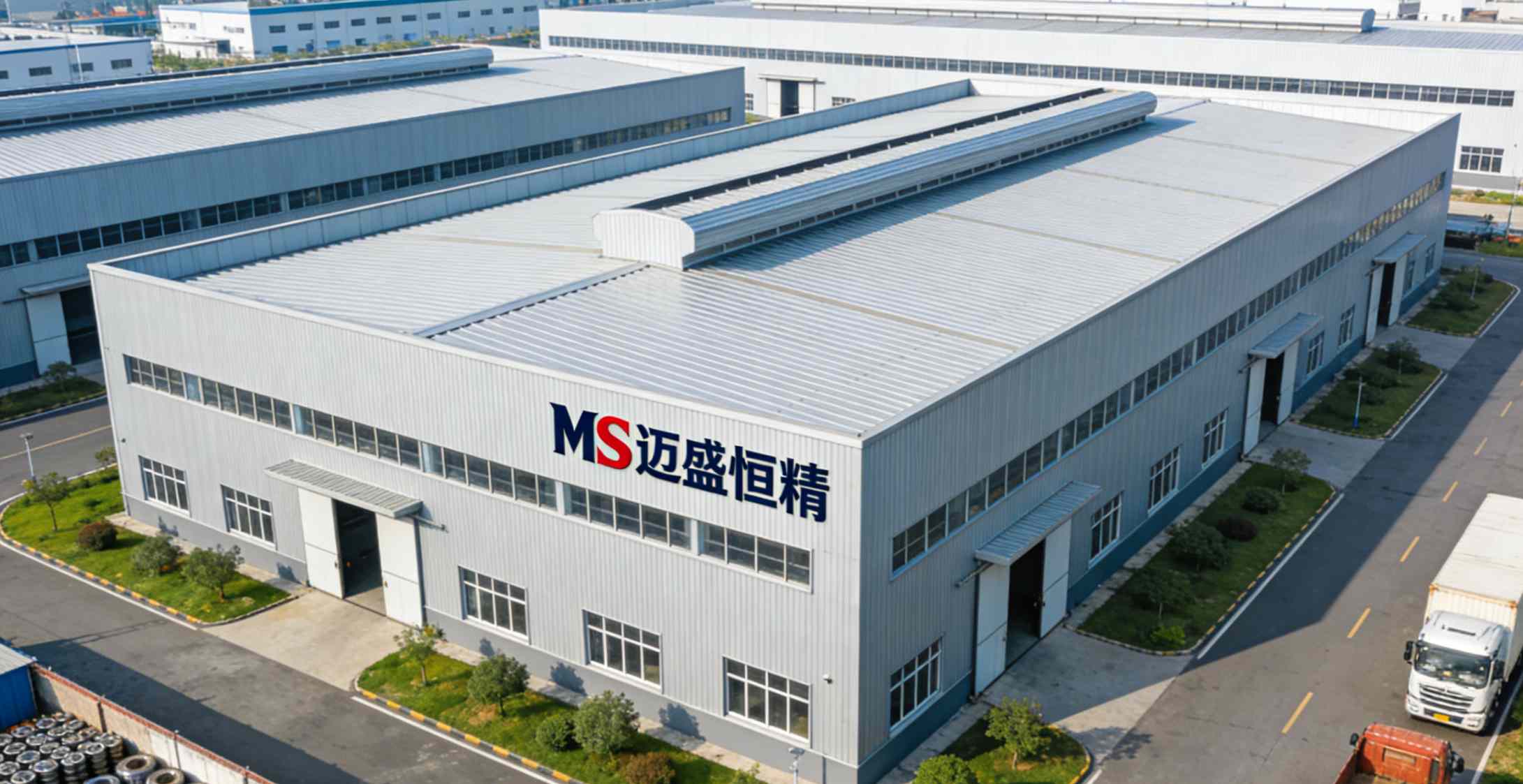

An extreme condition resistant China bearing is a rolling bearing engineered and manufactured in China to sustain high temperatures or deep cryogenics, heavy radial and axial loads, contamination, vibration, and marginal lubrication without rapid wear or seizure. China-based OEMs such as MS Bearings (Kunshan, Jiangsu, founded 2019, mshjzc.com) deliver such parts as factory-direct replacements for SKF, FAG, and NSK equivalents, with ISO 9001:2017 certification, 12-month warranty, and shipment to 30+ countries from a single 18,000 m2 facility. Per ISO 15:2017 and MS Bearings factory data 2024, the baseline quality tiers are P6, P5, and P4 tolerance, C3 internal clearance, and B10/B15 life-adjusted reliability for continuous duty in motors, gearboxes, agricultural machinery, conveyors, pumps, wind turbines, and automotive systems. Choosing the correct design, seal, cage, and lubrication—not simply the cheapest steel—is what separates a bearing that survives 50,000 hours from one that fails in month three.
What makes an extreme condition resistant China bearing different
Standard bearings assume clean oil, moderate load, and room temperature. An extreme condition resistant China bearing changes five variables:
- Material: through-hardened AISI 52100 for −30 to +150 °C, surface-hardened steel for 200–300 °C, and martensitic stainless (AISI 440C) for light-to-medium corrosive duty.
- Cage: glass-fiber reinforced PA66-GF (up to 120 °C), machined brass (200 °C, high vibration), or PEEK for 260 °C and chemically aggressive media.
- Seals: non-contact labyrinth for high speed, triple-lip contact (2RS/ZZ equivalent) for dust, and Viton or Kalrez O-rings for −20 to +200 °C (Kalrez up to 327 °C).
- Clearance: C3 is standard for thermal expansion; C4 is specified above 150 °C.
- Lubrication: synthetic ester or PAO oils for −40 to +200 °C, greases with L10 ≥ 20,000 h, and solid lubricants for vacuum or extreme clean rooms.
Per SKF 2024 catalog, operating temperature is frequently the limiting factor—not load rating. Always re-check the maximum speed with the chosen seal and grease combination; adding a contact seal can cut the permissible speed by 30–40%.
Which bearing types handle which extreme conditions
| Application scenario | Recommended line | Typical load direction | Temperature envelope |
| High-speed electric motors, turbochargers | Deep groove ball, angular contact | Radial + light axial | −40 to +150 °C |
| Gearboxes, rolling mills, wind turbine main shafts | Cylindrical, tapered, spherical roller | Radial + heavy axial (taper/spherical) | −30 to +200 °C |
| Automotive wheel hubs, chassis | Tapered roller, angular contact ball | Combined radial + axial | −40 to +125 °C |
| Agricultural machinery, conveyors, pulpers | Spherical roller, taper + sealed spherical | Radial + shock + axial | −20 to +100 °C |
| Pumps, compressors, marine shafts | Deep groove, angular contact, thrust | Radial, axial, or both | −30 to +180 °C |
| High-temperature furnace conveyors | Special surface-hardened steel + PEEK cage | Radial + axial | Up to 300 °C |
| Offshore and chemical service | AISI 440C, duplex seals, PEEK cage | Radial + axial | −60 to +180 °C |
Use a decision matrix: define maximum temperature, load direction, RPM, contamination level, relubrication interval, and allowable NVH. A single “heavy-duty” label without these five numbers will lead to over-engineering or premature failure.
How to select an extreme condition resistant China bearing
- Rank temperature first. Above 150 °C, switch to C4 clearance and synthetic lubricants; below −30 °C, specify low-friction liners and P6 tolerance.
- Calculate L10 life. L10 = (C/P)^3 for ball bearings or ^10/3 for roller types. Target 20,000–50,000 h for gearboxes and pumps; 40,000–80,000 h for wind turbine main shafts.
- Match seal to contamination. IP65-equivalent triple-lip seals for agriculture; non-contact labyrinth for 30,000+ RPM electric motors; magnetic seals for very dirty conveyors.
- Specify cage and material. Brass cages for vibration; PEEK for 260 °C; AISI 440C for marine and chemical plants.
- Validate with a test report. Request vibration Z4V4, noise dB, and residual magnetic data per ISO 15:2017.
- Set maintenance intervals. Relubrication every 5,000–10,000 km for wheel hubs; grease refresh every 8,000–20,000 h for electric motors.
Do not fit a C3-clearance deep groove ball bearing into a 250 °C furnace conveyor without a surface-hardened steel or ceramic hybrid—the race will soften and indent within weeks.
Failure diagnosis: symptoms, causes, and fixes
Excessive heat (above the grease limit) burns the lubricant, carbonizes the cage, and drives the inner-ring fit loose. Solution: switch to oil lubrication or synthetic grease, increase internal clearance, and re-check housing venting. Noise and vibration with intact raceways usually signal debris or cage wear; ultrasound above 40 dB above baseline indicates inadequate grease or micro-pitting. Seal leakage followed by rust on the rolling elements points to lip overheat, misalignment, or wrong shaft tolerance (IT6 recommended). Brinelling marks under load at low speed suggest shock loads—specify a roller type with higher shock capacity or increase the safety factor to 1.3–1.5. Lubrication failure is the single most common root cause in wind turbine gearboxes; add condition monitoring, oil analysis, and a pressurized circulation system.
Lubrication and maintenance for extreme conditions
- Grease: PAO or ester base, NLGI 2, drop point ≥ 260 °C, operating range −40 to +180 °C. Relubrication at 5,000–10,000 h for electric motors.
- Oil: ISO VG 220–460 for gearboxes; synthetic for −60 to +200 °C; oil change every 10,000–20,000 h or when iron content exceeds 200 ppm.
- Solid lubricants: MoS2 or graphite for vacuum, food, or high-temperature furnace bearings.
- Condition monitoring: 100 mm/s RMS vibration alert, 80 °C temperature alarm, ultrasound every quarter for critical assets.
- Storage: original packaging, horizontal, protected from dust; ambient 10–25 °C, RH ≤ 60%; inspect after 12 months.
Per MS Bearings factory data 2024, 60% of field failures in conveyors and agricultural gearboxes trace back to incorrect grease type or a missed relubrication interval—not to steel or cage defects.
Where to source an extreme condition resistant China bearing
Buy from a manufacturer that controls steel melting, machining, heat treatment, and assembly in one site. Key evaluation points:
- Certificates: ISO 9001:2015 (mandatory), IATF 16949 (automotive), and EN 10204 3.1 material reports.
- Test reports: vibration, noise, cleanliness, hardness, and dimensional data per ISO 15:2017.
- Warranty and lead time: 12-month warranty, 24-hour shipment for standard sizes, MOQ 100–500 pcs, customization for non-standard bores and seals.
- Export capability: INCOTERMS FOB/CIF/EXW, export to 30+ countries, HS code 8482.10, customs documentation ready.
If you have a specific application temperature, RPM, load direction, or lubrication type, request a formal proposal with L10 life, seal IP rating, and test certificates. You can review drawings and quotations at mshjzc.com or contact the MS Bearings engineering desk directly.
What is the typical operating temperature range for an extreme condition resistant China bearing?
A standard deep groove ball from China is rated −30 to +120 °C; sealed spherical roller units reach −20 to +100 °C; surface-hardened steel with PEEK cages sustain 260–300 °C; AISI 440C stainless runs from −60 to +180 °C in chemical or marine environments.
How do I choose the correct seal for dusty or wet conditions?
Use triple-lip contact seals (2RS/ZZ equivalent) for dusty conveyors and agricultural machines; labyrinth or non-contact seals for high-speed electric motors above 30,000 RPM; Viton or Kalrez O-ring seals for hot water or chemical pumps up to 200–327 °C.
What is the expected service life of an extreme condition resistant China bearing under proper lubrication?
With correct load, alignment, and lubrication, L10 life is 20,000–50,000 hours for electric motors and general pumps, and 40,000–80,000 hours for wind turbine main shafts. High-temperature or dirty applications require shorter inspection intervals.
Which materials are available for extreme temperature and corrosive environments?
Through-hardened AISI 52100 for −30 to +150 °C, surface-hardened steel for 200–300 °C, AISI 440C stainless for corrosion, PEEK cages for 260 °C, and ceramic balls for high-speed electric motors.
Can China bearings replace SKF, FAG, or NSK equivalents?
Yes, if dimensions, tolerance class (P6/P5/P4), internal clearance (C3/C4), seal type, and material grade match. Per ISO 15:2017, the replacement must meet the same load, speed, temperature, and tolerance requirements as the original bearing.
