
A custom specification China export bearing is a rolling bearing built to non-catalog dimensions, tolerances, materials, sealing, or surface treatments that a buyer defines in a drawing or written spec, then manufactured and exported from China under standard commercial trade terms such as FOB, CIF, or EXW. Customization typically changes the bore, outer diameter, width, race depth, contact angle, clearance class, cage type, seal, or tolerance grade — sometimes several at once. OEM engineers and MRO buyers specify them when a standard catalog part from SKF, FAG, NSK, Timken, or NTN cannot fit the envelope, survive the duty cycle, or meet the local supply timeline. Per ISO 15:2017, rolling bearings are classified by type, dimension series, and bore code, while dimensions and tolerances are defined in the applicable ISO bearing-series standard; per MS Bearings factory data 2024, roughly 35% of the company's export orders are custom-engineered rather than standard-catalog items.
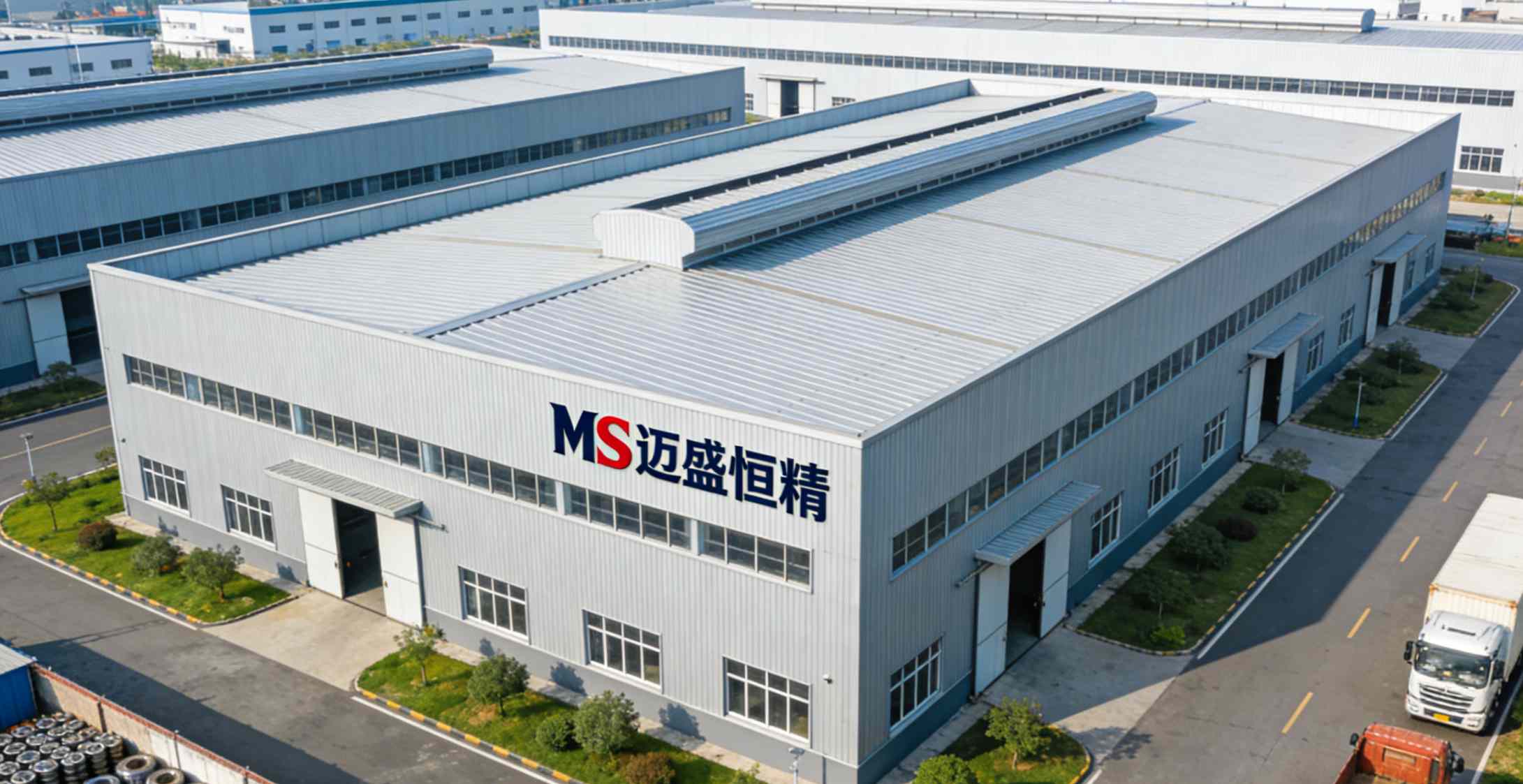
Where should you source a custom specification China export bearing? The short answer is directly from an ISO-certified Chinese bearing manufacturer with in-house metallurgy, machining, heat treatment, and inspection, rather than a trading-only intermediary. MS Bearings operates a factory in Kunshan, Jiangsu, ships to more than 30 countries, and supports custom drawings with production lead times from 15 to 30 days depending on material and volume. A custom specification China export bearing can be produced in deep groove ball, self-aligning ball, cylindrical roller, tapered roller, spherical roller, needle roller, angular contact, thrust, mounted bearing, and non-standard assemblies — so the buying decision should start with the application duty, not the catalog number.
Custom specification China export bearing: what can be changed in a drawing
A custom specification China export bearing usually starts as a 2D drawing or 3D model with a controlled dimension set, and the manufacturer maps the request onto a production family. The table below summarizes the most common customization zones seen in export orders placed at MS Bearings.
| Customization item | Typical control | Common examples | Typical effect |
|---|---|---|---|
| Boundary dimensions | Bore, OD, width, chamfer, radius | Non-standard bore from 8 mm to 1200 mm; special width fits a gearbox wall | Fits existing housings without redesign |
| Tolerance class | ISO tolerance grade | P5 / P4 / P2 for spindle use; custom runout for low-vibration motors | Lower noise, heat, and power loss |
| Clearance | Radial and axial clearance group | C2, C0, C3, C4, or custom preload for angular contact | Controls noise, heat, and stiffness |
| Material and heat treatment | Steel grade, hardness, case depth | GCr15, 52100, 440C stainless, case-hardened steel, TD rust-proof steel | Longer life under contamination, heat, or corrosion |
| Cage, seals, and lubrication | Cage type, contact, material; grease fill | Polymer, bronze, or steel cage; V-ring seals; NSL grease fill | Defines maintenance interval and speed ceiling |
| Surface treatment and geometry | Coating, crowning, race profile | Black oxide, zinc-nickel, PTFE coating; crowned rollers for edge loading | Improves misalignment capacity and corrosion resistance |
Custom work is not limited to a single product family. A custom specification China export bearing can be a deep groove ball unit for a motor, a cylindrical or tapered roller set for a gearbox, a spherical roller for vibratory conveyors, a needle roller for compressors, an angular contact pair for spindles, a thrust arrangement for pumps, or a mounted bearing with a bespoke housing and sealing plan.
Export specification table: compliance, inspection, and shipping terms
Export buyers evaluate a custom specification China export bearing on more than part geometry. Compliance documents, inspection tolerances, packaging, and delivery terms must be agreed before production. The table below is a practical spec sheet template for an export order.
| Spec line | Typical requirement | Notes for buyers |
|---|---|---|
| Product family | Deep groove ball, cylindrical roller, spherical roller, needle roller, angular contact, thrust, mounted bearing, non-standard | Name the family before quoting |
| Dimensions and tolerance | Per ISO 15:2017 classification; per ISO 0 and series standards for bore, OD, width, chamfer | Specify P0 / P6 / P5 / P4 and runout |
| Material and hardness | GCr15, 52100, 440C, case-hardened steel; hardness per material standard | Critical for agricultural, construction, and marine use |
| Clearance / preload | C2, C0, C3, C4; angular contact preload grades | Directly changes noise and temperature |
| Surface treatment | Black oxide, zinc-nickel, PTFE, phosphate | Decide before packaging to avoid rework |
| Sealing and lubrication | Open, shield, contact seal, labyrinth; grease quantity and type | State the operating RPM and temperature |
| Quality system | ISO 9001:2015 manufacturing control | Request certificate scope evidence |
| Inspection report | Dimensional report, hardness report, material certificate, noise data | Accept defined CQI / AQL level in the PO |
| Warranty and service | 12 months warranty from dispatch | Define failure categories before shipment |
| Packaging and marking | Individual box, bulk pack, pallet; marking per buyer artwork | Specify inner label and carton text |
| Delivery terms | EXW, FOB Shanghai / Ningbo, CIF, DDP by agreement | Freight class and Incoterms must match the quote |
| Lead time | 15-30 days for custom production; sample lead time varies by complexity | Confirm before engineering release |
Add a written acceptance criterion for noise, vibration, temperature, or backlash when the custom specification China export bearing will run above 3000 RPM, in a contaminated environment, or under reversing load.
How to order a custom specification China export bearing: 7 steps
- Define the duty cycle first. Record radial load, axial load, speed, temperature, duty hours per day, and contamination level. Example: a 7.5 kW electric motor may run at 2900 RPM with light radial load and moderate axial load, while a wind turbine main shaft can see oscillating loads and long unmonitored maintenance intervals.
- Release a controlled drawing or datasheet. Provide bore, OD, width, tolerance grade, clearance, material, seal, cage, and any special geometry.
- Request a sample or prototype batch. Test on the actual machine or a rig before mass production.
- Fix the inspection plan in the PO. Define dimensional checks, hardness verification, noise limits, and packaging marking.
- Lock the Incoterms and port. FOB Shanghai and CIF to a port in North America, Europe, Southeast Asia, or the Middle East are common.
- Approve pre-shipment samples. Confirm identification marking, finish, and packaging before the batch ships.
- Plan inbound testing and traceability. Keep lot codes, certificates, and first-article records for warranty and service analysis.
Engineering note: A bearing that is optimized for cost on paper but fails in service can cost more in downtime than the bearing price. For harsh environments, a slightly more expensive material, seal, or heat treatment is often the lower-risk option.
Custom specification China export bearing vs standard catalog: which fits your sourcing plan
| Comparison | Standard catalog bearing | Custom specification China export bearing |
|---|---|---|
| Design intent | Fits common housings and shafts | Fits the machine, not the catalog |
| Dimension control | ISO series dimensions and standard tolerance | Drawing-controlled bore, OD, width, chamfer, profile |
| Material options | Standard bearing steel by default | GCr15, 52100, 440C, case-hardened, corrosion-resistant options |
| Clearance and preload | Limited standard groups | C2, C0, C3, C4, or custom preload |
| Lead time | Often shorter for common sizes | 15-30 days production depending on material and volume |
| Cost profile | Low at high volume | Higher tooling or setup cost; value rises when redesign cost is avoided |
| Fits best when | Envelope and duty are standard | Space is constrained, load is special, environment is harsh, or delivery timeline is fixed |
Choose a custom specification China export bearing when a standard catalog part forces an expensive housing redesign, cannot meet the required load or life, or cannot be sourced reliably. Choose a standard catalog part when the application is common, the volume is high, and no drawing change is justified.
OEM replacement and cross-reference for a custom specification China export bearing
Many buyers start with an OEM number such as an SKF, FAG, NSK, Timken, or NTN reference and then decide whether a standard equivalent or a custom specification China export bearing is the correct sourcing path. A practical approach is to compare boundary dimensions, load rating, clearance, sealing, material, and operating limits before accepting an alternative.
- When a standard cross-reference works: the load rating, speed limit, tolerance, and sealing are equivalent, and the housing can accept the standard envelope without machining.
- When a custom specification China export bearing is required: the original design is discontinued, the housing is not standard, the duty is higher, the environment is corrosive or high-temperature, or delivery is too long for the production plan.
- When a mixed set is the practical answer: the machine uses a custom housing bore, special seal, or modified width on one side while the rest of the train can stay standard.
For wind power, a custom specification China export bearing often includes spherical roller or tapered roller geometry with special raceway crowning, a hardened and stabilized raceway, and seals matched to open gear lubrication. For pumps and motors, the custom work is more likely to focus on tolerance grade, clearance, sealing, and noise control. For agricultural machinery and construction equipment, material, case depth, sealing, and contamination resistance dominate.
What is a custom specification China export bearing?
A custom specification China export bearing is a rolling bearing made to buyer-defined dimensions, tolerance, material, seal, cage, clearance, or surface treatment, then exported from China under FOB, CIF, or EXW terms. The result can be a non-standard bore, modified width, higher tolerance grade, corrosion-resistant material, or a special seal for motors, gearboxes, conveyors, pumps, agriculture, construction, or wind applications.
Which custom specification China export bearing type is best for an OEM design?
The best type is the one whose load path matches the machine duty: deep groove ball for light to moderate radial and light axial loads, cylindrical roller for high radial loads, tapered roller for combined radial and axial loads, spherical roller for heavy loads and misalignment, needle roller for a compact radial envelope, angular contact for combined and high-speed duty, and thrust bearings for axial loads. Confirm load rating, speed limit, clearance, and temperature range before release.
How long does a custom specification China export bearing take to deliver?
Production lead time for a custom specification China export bearing is typically 15 to 30 days depending on material, customization level, and order size; sample lead time varies by complexity and testing requirements. Add transit time for sea or air freight and customs clearance when planning inventory.
Why choose a custom specification China export bearing instead of a standard catalog bearing?
A custom specification China export bearing is chosen when a standard catalog bearing cannot fit the housing, meet the load rating or life target, control noise and heat at the required RPM, or survive contamination or corrosion. Choosing a custom part can avoid a costly machine redesign and can stabilize delivery for ongoing production.
For sourcing that matches the technical file, inspection plan, and delivery schedule, review the custom option and export terms at mshjzc.com or MS Bearings and request a factory proposal with tolerance, material, testing, packaging, Incoterms, and lead time defined in the same document.
